Ceiling Fan in Israel: How to Choose the Size, Motor and Model for Home, Balcony and Pergola
A good ceiling fan for an Israeli home in 2026 is usually a model with a DC motor, a remote, 6 speeds and a winter (reverse) mode, in a diameter that fits the room: 42–44 inches for a bedroom and 52 inches and up for a living room. In Israeli stores we saw fans like these at about ₪900–2,000 (NIS). Per the spec sheets, a DC motor draws about 35–48 watts at top speed and under 5 watts at low speed, i.e. a few agorot per hour.
In this guide you’ll find how to choose a diameter by room size, the difference between DC and AC motors, what to check in a ceiling fan for a balcony (mirpeset) or pergola (IP44 protection and above), what to know about the Star, Westinghouse and Norther fans sold in Israel, and how to combine a fan with an AC to save electricity. We did not test the fans ourselves. The data comes from spec sheets and product pages at Israeli stores.
The short answer
Fans, November 2026- DC: quiet and efficient, with 6 speeds
- 42–44 inch diameter
- 48–52 inch diameter
- About 35–48W at top speed (DC)
- About ₪550–2,000
- IP44 or higher, rated for outdoor use
- Up to 10–15 years on some models
Models worth checking
Picked on specs, Israeli importer warranty and shop prices in Israel in November 2026. We did not test them at home. Prices change, check before you buy.
Westinghouse Longwood 42 WiFi 73182
42 inches (105 cm), DC motor, 6 speeds, 28W LED with dimmer and 3 tones, remote and WiFi app
Why: Per the product page, a 15-year extended warranty on the motor and two years on other parts, plus control from your phone.
Watch out: Indoor installation only. In a room larger than 16 m², a bigger diameter is better.
Westinghouse Sacramento 52
52 inches (132 cm), DC motor, 6 speeds (4.5–35.4W), 28W LED with dimmer and 6 tones, winter mode, remote
Why: Very low consumption at low speeds per the spec sheet (4.5W), with adjustable lighting and wooden blades.
Watch out: Indoor installation only. The product page shows a one-year warranty with no motor warranty details.
Norther Tango IP44 52
52 inches, DC motor up to 45W, 6 speeds, IP44, 24W LED, winter mode, remote with timer up to 8 hours
Why: An IP44 model rated for outdoor and pergola use, at one of the lowest prices we saw for this diameter with a DC motor.
Watch out: One-year warranty per the product page. On a pergola, make sure the structure can carry the fan and that the wiring is suited for outdoors.
Star X 52
52 inches, 48W DC motor, 6 speeds (70–205 RPM), up to 7,037 CFM, 30W LED with dimmer, reverse, 3 blades
Why: Per the product page it’s designed for covered balconies and pergolas and is humidity resistant, with a 10-year motor warranty through Electrostar, and it can be installed without the light.
Watch out: At the time of checking the model was listed as temporarily out of stock at the store we checked. Confirm availability before planning installation.
Star LED X 48 (חוץ)
48 inches (122 cm), 35W DC motor, 6 speeds, 20W LED with dimmer, approved for outdoor hanging, humidity resistant
Why: A dedicated outdoor model with low power use. Per the product page, the motor warranty is 3 years for outdoor installation and 10 years indoors.
Watch out: Per the product page it is “not waterproof”, and no IP rating is listed. On a pergola exposed to rain, prefer an IP44 model. It was listed as temporarily out of stock at the store.
Compare Fans and air coolers: 9 models
9 models out of 9
| Model | Capacity | Energy | Noise | Size (cm) | Shabbat | Price |
|---|---|---|---|---|---|---|
 Gold Line ATL-486Air cooler | — | ? | — | — | — | ₪139Lowest price we found |
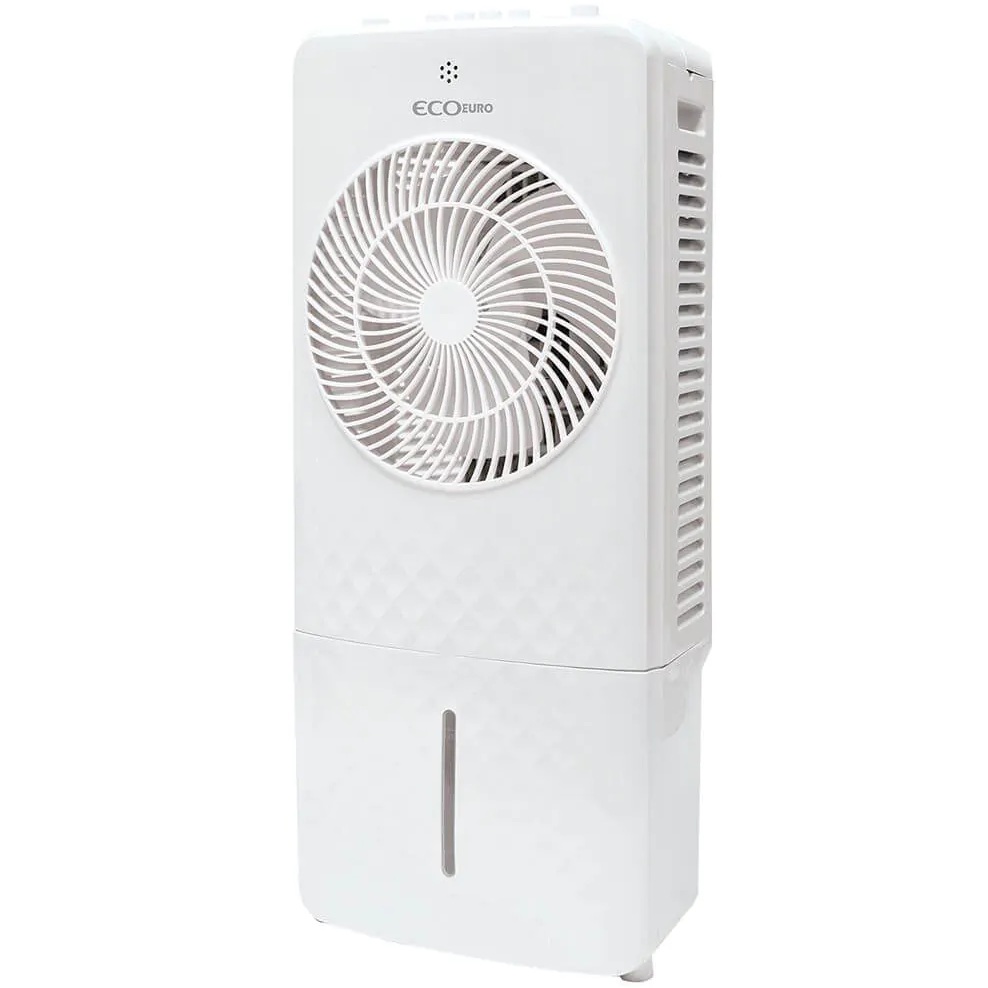 Eco Euro ECFC-120Air cooler | — | ? | — | 23.5×56.5×21 | — | ₪199Lowest price we found |
| Midea AC200-WAir cooler | — | ? | — | 40×97×32.8 | — | ₪879Lowest price we found |
| Norther Tango IP44 52Ceiling, outdoor | — | ? | 48 dB | 132×× | — | ₪899Lowest price we found |
| Star LED X 48Ceiling, outdoor | — | ? | 48.2 dB | 122×33× | — | ₪1,049Lowest price we found |
| Westinghouse Longwood 42 WiFi 73182Ceiling | — | ? | 55 dB | 105×38× | — | ₪1,189Lowest price we found |
| Star X 52Ceiling | — | ? | 53.5 dB | 132×25× | — | ₪1,349Lowest price we found |
| Venta Cyclone 12000Air cooler | 12000 m³/h | ? | 20 dB | 74.5×136×47.5 | — | ₪1,499Lowest price we found |
| Westinghouse Sacramento 52Ceiling | — | ? | 48 dB | 132×36× | — | ₪1,999Lowest price we found |
No model matches all filters. Try a higher price limit.
Data from manufacturer and shop pages; prices as seen in Israeli shops in November 2026. We did not test the appliances at home.
All Fans and air coolers in our database
Prices in Israel: Fans
A simple fan, sometimes with pull chains instead of a remote and 3 speeds; fine for a secondary room, but less quiet and less flexible.
Most homes: DC motor, remote, 6 speeds, LED light and winter mode; most popular 42–52 inch models are here, including IP44 models for pergolas.
Large 57-inch-plus diameters for an open living room, WiFi, strong lighting or wood design; suits large spaces and high ceilings.
Price ranges seen in Israeli shops and price-comparison sites in November 2026, VAT included, usually without installation.
What to look at before buying
| What to check | What it is | Our recommendation |
|---|---|---|
| Diameter | The fan’s width from blade tip to blade tip, in inches. It determines how much area the fan covers. | Rule of thumb: up to about 10 m² 36 inches, 10–16 m² 42–44 inches, 16–25 m² 48–52 inches, and above 25 m² 57 inches or more, or two fans. Per the store, the Norther Tango IP44 52 suits a room of up to 25 m². |
| DC or AC motor | A DC (direct current) motor is more efficient and quieter, and allows more speeds. An AC motor is cheaper. | Choose DC. On the models we checked, the motor draws 35–48W at top speed, and the Westinghouse Sacramento drops to 4.5W at low speed. |
| Speeds and airflow | Number of speeds and airflow (CFM) at top speed. | 6 speeds give good control: low for sleeping and high for hot days. The Star X 52 lists up to 7,037 CFM. |
| Lighting | Most fans include a built-in LED panel, some with a dimmer and adjustable color temperature. | For a bedroom, a dimmer and warm tone (3000K). For a living room, 1,500 lumens or more, or installation without the light if there’s other lighting. The Star X 52 can also be installed without the light. |
| Winter mode (reverse) | Reverses blade direction, pushing warm air from the ceiling downward. | Useful in winter with an AC or heater, especially with high ceilings. The Norther Tango and Star X 52 list this function explicitly. |
| Outdoor suitability | Protection rating against water and dust (IP) and humidity resistance. | For a balcony or pergola, IP44 or higher and a model explicitly rated for outdoor use. Models marked “not intended for pergolas and balconies” don’t qualify, even if they’re cheap. |
| Warranty | General warranty and a separate warranty on the motor. | Look for a long motor warranty: the Westinghouse Longwood lists 15 years, and Star up to 10 years for indoor installation. Note that the warranty may be shorter for outdoor installation. |
What ceiling fan size fits your room?
Choose the diameter by floor area: up to about 10 m² (108 sq ft) 36 inches, 10–16 m² 42–44 inches, 16–25 m² 48–52 inches, and above 25 m² (269 sq ft) 57 inches or more, or two fans.
These are common market ranges, not an exact formula. Some anchor points from the product pages we checked:
- Norther Tango IP44 52: per the store, suits rooms of up to 25 m².
- Star 7 in three diameters: 36, 44 and 52 inches. The same series for different room sizes.
- Star X 57: a 57-inch (about 145 cm) diameter for large spaces.
What else matters:
- Room shape: in a long room, such as a living and dining area, two medium fans are better than one large fan in the middle.
- Ceiling height: with a low ceiling of about 2.5 m (8.2 ft), leave enough clearance between the blades and people’s heads, and prefer a flush-mount fan. With a high ceiling, a downrod brings the fan to an effective height.
- Furniture: place the fan above the seating area or bed, not necessarily at the geometric center of the room.
In a small room, an oversized fan creates a strong, unpleasant draft. In a large room, an undersized fan moves air only directly beneath it.
Quick inch-to-cm conversion: 36 in ≈ 91 cm, 42 in ≈ 105–107 cm, 44 in ≈ 112 cm, 48 in ≈ 122 cm, 52 in ≈ 132 cm and 57 in ≈ 145 cm. Before buying, measure the distance from the ceiling point to the nearest wall and cabinets. The blades need comfortable clearance on every side, which limits the maximum diameter you can install.
How many blades? Most modern DC models come with 3 blades, and there are also models with 4 or more. The number of blades mainly affects the look and the feel of the airflow. From what we saw in the spec sheets, airflow is determined mainly by the diameter, the motor and the rotation speed, so compare by the CFM figure when it’s listed.
DC or AC motor: what’s the difference and why it matters
A DC motor is efficient, quiet and allows more speeds. For a ceiling fan that runs many hours in summer, it’s almost always the right choice.
What we saw in the spec sheets:
- Westinghouse Sacramento 52 (DC): draws 4.5W at the lowest speed and up to 35.4W at the highest, with 6 speeds.
- Star X 52 (DC): 48W motor, 6 speeds, 70–205 RPM.
- Star LED X 48 (DC): 35W motor.
- Star 3 44: 50W motor, 3 speeds, pull-chain control and no remote. The product page doesn’t state whether the motor is DC or AC.
What does it cost in electricity? At the residential rate of 63.52 agorot per kWh, a 40W fan running 10 hours a day uses 0.4 kWh, i.e. about 25 agorot a day and about ₪7.6 a month. At low speed, 5–10W, that’s roughly one to two agorot per hour. For comparison, a portable AC draws about 1 kWh per hour at full load per the spec sheets.
More advantages of DC: the motor is quieter for sleeping, there are 6 speeds instead of 3, and most models come with a remote, a timer and sometimes WiFi. Some models also have a long motor warranty: 10 years on Star for indoor installation, and 15 years on Westinghouse’s Longwood.
When AC? On a minimal budget, in a secondary room where the fan hardly runs. Even then, check the number of speeds and the control type.
WiFi and smart home. Some models, like the Westinghouse Longwood 42 WiFi, can be controlled from an app. That’s handy when you want to switch the fan on before entering the room, or add it to schedules. For most homes a regular remote with a timer is enough, and there’s no reason to pay extra just for WiFi.
Built-in lighting. Most models include an LED panel. In a bedroom, prefer a warm tone of about 3000K and a dimmer. In a living room, look for brighter light: the Star X 57, for example, lists 3,230 lumens, and the Star X 52 about 1,565 lumens. If the room has other lighting, you can choose a model that installs without the light.
Ceiling fan for a balcony or pergola: what you must check
For a balcony or pergola you need a fan that the manufacturer explicitly rates for outdoor use, with at least IP44 protection, installed by an electrician with wiring suited for outdoors.
What to check:
- Protection rating (IP): a guide by pro.co.il (an Israeli contractors’ site) recommends IP44 or higher for pergolas. The Norther Tango IP44 52 meets this. The Star LED X 48, which is approved for outdoor hanging, is described as “not waterproof” with no IP listed. So it suits a covered balcony, not a pergola exposed to rain.
- Manufacturer rating: many models are marked “not intended for pergolas and balconies” on the product page, for example the Star 4 Pro and the Star 7 52. Don’t install them outdoors even if the balcony is covered.
- Materials: per pro.co.il, prefer corrosion-resistant materials such as stainless steel or reinforced plastic.
- Pergola structure: the fan adds weight and vibration. An electrician should check that the beam, wood or metal, can carry it; sometimes reinforcement is needed.
- Electricity: a dedicated line and breaker, and waterproof connections, may be required.
- Warranty: on some models the motor warranty is shorter for outdoor installation. On the Star LED X 48, for example, it’s 3 years outdoors versus 10 indoors.
Installation cost on a pergola is usually higher than indoors because of preparation, wiring and reinforcement. Get a quote from an electrician who knows your type of pergola. Also ask for a blade balance check during installation to prevent wobbling.
A fan on a balcony enclosed with shutters or glass behaves like an indoor fan, but humidity and dust still reach it when the windows are open. If the balcony is often open to wind and rain, an outdoor model is better. On a fully open pergola, IP44 protection withstands water splashes but not direct, prolonged rain. Placing it under a protected beam or awning will extend the fan’s life. In any case, clear cobwebs and dust from the fan at the end of each season.
Star, Westinghouse and Norther fans: what’s sold in Israel
In Israeli stores, three names recur in the ceiling fan category: Star, Westinghouse and Norther. Each has models for rooms, and some also for outdoors.
- Star: the Star 3, Star 4, Star 4 Pro, Star 7 and Star X series, in diameters of 36–57 inches. On product pages the warranty is subject to Electrostar’s warranty certificate, and at another store Star is listed as the official importer. DC models list a 10-year motor warranty for indoor installation. The X series includes models rated for covered balconies and pergolas. At the time of checking, in mid-November, many Star models were listed as “temporarily out of stock” or “sold out” at the stores we checked, probably because of the end of the season.
- Westinghouse: a wide range at one chain: Longwood, Laguna, Erica, Montana, Magnolia, Jessica and more, from 42 inches up to extra-large models like the Denver 80 and Owen 100. There are also IP44 models, such as the Jessica 52 IP44. The Longwood lists a 15-year extended motor warranty.
- Norther: relatively low-priced models such as the Young 42, Daisy 42, Vermont 42 and Tango 52, including the Tango IP44 for pergolas.
We didn’t test the fans ourselves and have no long-term durability data, so we won’t rank one brand above another. Compare by diameter, DC motor, number of speeds, outdoor suitability and motor warranty.
How to compare similar models. Take two or three models of the same diameter and note for each: motor type, consumption at top speed, number of speeds, CFM if listed, light output in lumens, whether there’s a winter mode, whether it’s allowed outdoors, and the motor warranty. Among the models we checked, for example, the Star X 52 lists 48W and up to 7,037 CFM, the Norther Tango IP44 52 lists up to 45W and IP44, and the Westinghouse Sacramento 52 lists 35.4W at top speed and a 28W light with 6 tones. A small table like this quickly shows what you’re paying for.
Seasonal stock. Ceiling fans are a seasonal product. In late autumn and winter some models are missing from stores, and new stock arrives in spring. If you’re renovating and planning ceiling electrical points, choose a model early and confirm its dimensions and weight with the electrician.
Ceiling fan and AC: how to combine them and save electricity
A ceiling fan doesn’t cool the air. It moves it and creates a cooling sensation on the skin. Combined with an AC, you can raise the AC temperature and feel the same.
How it works in practice:
- On mild days, in spring, autumn and on moderate summer evenings, a ceiling fan alone is enough for most people, at a cost of agorot per hour.
- On hot days, run the AC at 25–26°C (77–79°F) together with the ceiling fan at low-to-medium speed. The fan spreads the cool air evenly and prevents warm “pockets”.
- At night, a quiet fan on low with an off-timer on the AC lets you switch the AC off after an hour or two and keep sleeping comfortably.
- In winter, in reverse mode, the fan on low pushes down the warm air that has collected near the ceiling. This is especially useful with high ceilings and in a room heated by the AC.
Why does it save? A 1 HP wall-mounted AC draws hundreds of watts while running, and a portable AC about 1 kWh per hour at full load. A DC fan draws 5–48 watts. Every hour the fan replaces the AC, or lets it run at a lower load, cuts the bill.
If you haven’t chosen an AC yet, our best air conditioner guide covers all the considerations, and our page on how many horsepower an AC needs has a table by room size.
Ceiling fan or standing fan? A standing fan is cheaper and portable, but takes up floor space, points at one spot and is sometimes noisier. A ceiling fan spreads air across the whole room, takes no space and also serves as a light fixture. In a kids’ room, where a standing fan is one more thing to trip over, a ceiling fan is safer and more convenient. That way the fan becomes a permanent part of the home, not just a stopgap for a heat wave.
Installation, height and safety
A ceiling fan should be installed by an electrician, on a ceiling electrical point that can carry the weight and vibration. It must be installed so the blades are out of reach.
What to know:
- Electrical point: if there’s a ceiling light point, in most cases a fan can be installed on it. Confirm with the electrician that the box and anchoring suit a fan and not just a lamp.
- Height: leave safe clearance between the blades and the floor and a tall person’s head. With a low ceiling, choose a flush-mount model, such as the Star ALEX, which is listed as “flush to ceiling”. With a high ceiling, use a downrod.
- Distance from walls and cabinets: the blades must turn without getting close to a wall, an open cabinet or another light fixture.
- Balance: after installation, check there’s no wobbling. Wobbling indicates an unbalanced blade or loose anchoring.
- Remote and switch: most DC models are controlled by remote. Ask the electrician whether to keep a wall switch as a master off.
- Shabbat: a remote-controlled fan doesn’t always return to its previous state after a power cut or a Shabbat timer (shaon Shabbat). If you plan to run it on a Shabbat timer, ask the seller in advance how the model behaves when power returns.
Cost: the installation price depends mainly on whether there’s already a suitable ceiling point, and on a pergola also on reinforcement and wiring. Get a quote from a licensed electrician before buying.
In a kids’ room, install the fan so the blades can’t be reached from a bunk bed or high shelf. A top bunk close to the ceiling and a ceiling fan don’t go together. Keep the installation instructions at home.
Maintenance and common problems
A ceiling fan needs almost no maintenance: dust the blades every few weeks, and once a season check that the screws are tight and there’s no wobbling.
Common problems and what to do:
- Wobbling: usually an unbalanced blade, a loose screw or unevenly accumulated dust. Clean the blades, tighten the screws and use the balancing kit if one came with the fan.
- Humming noise: sometimes caused by a wall dimmer that isn’t suitable for the fan. A fan should be controlled by its own remote or a regular switch.
- The remote doesn’t respond: replace the batteries and check the instructions to see whether you need to re-pair the remote with the fan.
- The light won’t turn on: with a built-in LED panel you usually don’t replace a bulb. Contact service according to the warranty certificate.
- Outdoor fan: at the end of the season, clean off dust and dirt and check for signs of rust or moisture at the connections.
During the warranty period, don’t open the motor housing yourself. Contact the importer according to the warranty certificate. A 10–15 year motor warranty is only worth something if you keep the invoice.
Common buying mistakes: buying an indoor fan for an exposed balcony, choosing a diameter too large for a small room, installing on a point not designed for a fan’s weight, and connecting a DC fan to a wall dimmer. Each of these shortens the fan’s life or hurts comfort. Read the manufacturer’s installation instructions with the electrician before the work. That way you’ll avoid unnecessary problems.
The bottom line
Recommended motor: DC: quiet and efficient, with 6 speeds. Bedroom 10–16 m² (108–172 sq ft): 42–44 inch diameter.
FAQ: ceiling fan in Israel
What is the best ceiling fan to buy in Israel?
For most homes, a fan with a DC motor, 6 speeds, a remote and winter mode, in a diameter that fits the room: 42–44 inches for a bedroom and 52 inches for a living room. In stores we saw models like these from Westinghouse, Star and Norther at about ₪900–2,000.
How much does a ceiling fan cost in Israel?
In Israeli stores we saw simple fans at about ₪350–700, DC models with a remote and light at about ₪900–1,400, and large or design models at about ₪1,700–2,800. Installation by an electrician is paid separately.
How much electricity does a ceiling fan use?
Per the spec sheets, a DC-motor fan draws about 35–48W at top speed and under 5W at low speed. At 63.52 agorot per kWh, 10 hours a day at 40W costs about ₪7.6 a month.
Which ceiling fan is suitable for a balcony?
A model the manufacturer explicitly rates for outdoor use, with at least IP44 if the balcony is exposed to moisture. The Norther Tango IP44 52, for example, is rated for outdoors and pergolas. The Star X 52 is rated for covered balconies and pergolas and is humidity resistant. Models marked “not intended for pergolas and balconies” are not suitable.
Ceiling fan for a pergola: what do I need to know?
You need a model with IP44 or higher, corrosion-resistant materials, and an electrician to check that the beam can carry the fan and that the wiring suits outdoor use. Installing on a pergola usually costs more than indoors. Note that on some models the motor warranty is shorter for outdoor installation.
Are Star ceiling fans good?
Star fans are sold at the major chains in several series, with an Electrostar warranty. DC models list a 10-year motor warranty for indoor installation. We didn’t test them ourselves. Compare by diameter, motor, outdoor suitability and warranty, and check stock, since many models were unavailable in November.
What’s the difference between a DC and AC ceiling fan motor?
A DC motor uses less electricity, is quieter and usually offers 6 speeds and a remote. An AC motor is cheaper and usually comes with 3 speeds. For a fan that runs many hours in summer, DC pays off.
What size ceiling fan for a bedroom?
For a 10–16 m² bedroom, a 42–44 inch diameter fits. In a room smaller than 10 m², 36 inches is enough. Prefer a quiet DC motor with a very low speed, a timer and a dimmable light.
Can a ceiling fan replace an AC?
No. A fan doesn’t lower the air temperature; it only creates a cooling sensation. On mild days it can be enough on its own. On hot days, combining an AC at 25–26°C with a fan on low gives good comfort with less electricity.
What is winter mode on a ceiling fan?
Winter mode, or reverse, flips the rotation direction so the fan pushes the warm air near the ceiling downward. It’s useful in a heated room, especially with a high ceiling. Run it at low speed.
Related home guides
Sources we checked
- soferavi.co.il/קטגוריה/מזגנים-ומוצרי-אקלים/מאווררים/מאוורר-תקרה
- bug.co.il/מאוורר-תקרה-52-כולל-שלט-ותאורה-מובנית-star-967798741
- bug.co.il/מאוורר-תקרה-44-כולל-שלט-ותאורת-star-led-910247548
- bug.co.il/מאוורר-תקרה-57-כולל-שלט-ופאנל-תאורה-star-40w-led-9677151518
- soferavi.co.il/%D7%9E%D7%95%D7%A6%D7%A8%D7%99%D7%9D/%D7%9E%D7%90%D7%95
- pro.co.il/electricians/guide/installing-ceiling-fan-pergola
- supermarker.themarker.com/bills/guides/electricity-tariff-2026